

Quebec’s culture is a distinct blend of French heritage, North American values, and modern workplace practices that shapes how people communicate, collaborate, and build professional relationships. Unlike the rest of Canada, Quebec operates primarily in French, follows unique labor laws, and maintains social customs rooted in centuries of tradition. For anyone seeking employment in Quebec City, understanding these cultural foundations isn’t just helpful, it’s essential for successful integration into the workplace.
The province’s cultural identity directly influences everyday workplace behaviors, from how you greet colleagues to how decisions get made in meetings. French isn’t simply a language requirement, it’s the primary vehicle for professional communication and a reflection of Quebec’s commitment to preserving its identity within North America. Employers expect comfort with French-language correspondence, and colleagues appreciate efforts to engage in their mother tongue, even when English proficiency exists.
Beyond language, Quebec’s workplace culture emphasizes work-life balance more than many North American markets, with generous vacation policies and strong union representation in many sectors. The province also maintains distinct regulations around work and immigration requiring newcomers to understand both federal Canadian requirements and Quebec-specific selection processes.
This article breaks down the key components of Quebec’s professional culture, explains how these elements function in real workplace situations, and provides practical guidance for adapting to Quebec City’s employment landscape with confidence.
What Quebec’s Professional Culture Means
Quebec’s professional culture represents a distinctive blend of French European traditions and North American business practices, shaped by the province’s unique linguistic identity and legal framework. This cultural landscape differs from both English Canada and France, creating workplace environments in Quebec City that value relationship-building, formal courtesy, and collective well-being alongside efficiency and productivity.
At its core, professional culture in Quebec reflects the province’s commitment to preserving French language and identity while participating in a broader North American economy. This means workplaces operate primarily in French, with communication styles that favor politeness and indirect approaches over blunt directness. The influence of French heritage appears in formality levels, respect for hierarchy, and the importance placed on proper titles and greetings.
- Langue de travail (Working Language)
- French serves as the primary language of business in Quebec under provincial law, requiring most workplace communication, documents, and interactions to occur in French.
- Joie de vivre professionnelle
- The balance between professional dedication and personal well-being, reflecting Quebec’s emphasis on quality of life, reasonable work hours, and generous vacation time.
- Relations interpersonnelles
- The importance of personal relationships in professional settings, where building rapport and trust often precedes formal business discussions.
- Hiérarchie respectueuse
- A workplace structure that respects authority and seniority while maintaining more egalitarian communication than traditional European models.
Understanding this cultural framework helps job seekers recognize that success in Quebec City workplaces requires more than technical skills. It demands cultural awareness, French language capability, and appreciation for local values around collaboration, work-life balance, and community. Newcomers who invest time learning these cultural expectations find smoother integration into teams and faster career advancement.
How Professional Culture Works in Quebec City

Language in the Workplace
French is the official language of Quebec, and workplaces in Quebec City operate primarily in French. Under the Charter of the French Language, businesses with 50 or more employees must conduct their operations in French, from internal communications to meetings and job postings. Quebec’s Bill 96 French language reforms have strengthened these requirements, making French proficiency increasingly essential for most professional roles in the city.
For job seekers, this means you’ll likely need functional French to participate fully in workplace activities. Even in companies where English is common, meetings, team discussions, and written documentation default to French. Many positions list bilingualism as a requirement, though what that means varies by employer and role. Customer-facing positions almost always require French, since most Quebec City residents prefer to communicate in their first language.
Language needs in Quebec research confirms that employers value candidates who demonstrate commitment to improving their French, even if they’re not yet fluent. If you’re still developing your French skills, be honest about your current level during interviews and show your willingness to learn. Some employers offer language training programs or partner with French language schools, particularly for skilled workers in high-demand fields. Starting with basic professional French phrases and actively practicing with colleagues builds credibility and helps you integrate faster into Quebec City’s workplace culture.
Communication Styles and Etiquette
Quebec professionals typically blend formal courtesy with warmth once rapport develops. Initial workplace interactions lean formal, using “vous” (the formal “you”) and titles like “Monsieur” or “Madame” until invited to switch to the informal “tu.” This formality isn’t coldness; it signals respect and professionalism.
Communication tends to be direct yet diplomatic. Unlike some North American workplaces where bluntness is valued, Quebec colleagues frame feedback and disagreement with tact. Expect colleagues to explain their reasoning rather than deliver curt yes-or-no answers. Small talk before meetings is common and appreciated, discussing weather, family, or weekend plans builds the personal connection Quebec culture values.
Physical greetings matter: handshakes are standard for first meetings and formal occasions, while colleagues who know each other often exchange la bise (cheek kisses) in more casual settings, though this varies by workplace. Eye contact during conversation shows engagement and honesty.
Email follows similar patterns, begin with polite greetings, avoid terseness, and end with courteous closings. Rushing straight to business without pleasantries can seem abrupt. Building relationships through these small courtesies opens doors in Quebec’s relationship-oriented professional environment.
Work-Life Balance Expectations
Quebec’s approach to work-life balance stands out in North America. The province legally mandates two weeks of paid vacation after just one year of employment, increasing to three weeks after five years. Many Quebec City employers offer even more generous time off, and taking your full vacation entitlement is not only accepted but expected.
Standard work weeks typically run 35 to 40 hours, with overtime carefully regulated under provincial labour laws. Unlike some North American cities where staying late signals dedication, Quebec professionals generally respect established work hours. You’ll find offices emptying promptly at 5 p.m., and colleagues rarely answer work emails after hours or on weekends.
Statutory holidays are taken seriously, Quebec observes several provincial holidays beyond federal ones, including Saint-Jean-Baptiste Day on June 24. Family obligations carry significant weight in professional contexts. Missing work for a child’s school event or a family emergency receives understanding rather than judgment.
This balance reflects Quebec’s broader cultural values around quality of life. Job seekers should recognize that demonstrating commitment through overwork may actually signal poor time management rather than dedication. Respecting boundaries shows you understand local professional norms.
Components of Quebec’s Workplace Culture
Hierarchy and Authority
Quebec workplaces typically feature moderate hierarchies that blend French formality with North American accessibility. While organizational charts exist and titles matter, the distance between management and staff tends to be smaller than in many European contexts yet more structured than in some anglophone Canadian settings.
Authority figures earn respect through expertise and fairness rather than position alone. Managers are expected to be approachable and willing to explain decisions, though final authority still rests with leadership. You’ll find that Quebec professionals appreciate supervisors who listen to input and consider team perspectives, even when making top-down decisions.
Formal address using “vous” and professional titles remains common when speaking French to superiors, particularly in initial interactions. This formality coexists with relatively open-door policies and regular informal check-ins. Direct challenges to authority in public settings are generally avoided; disagreements are better expressed privately or through proper channels.
Career advancement often follows established paths, with promotions tied to both merit and organizational tenure. Building respectful relationships with supervisors and demonstrating both competence and cultural fit contribute significantly to professional growth in Quebec City organizations.
Collaboration and Teamwork
Quebec workplaces typically favor collaborative approaches where team members contribute ideas and work toward shared solutions. Rather than expecting one person to make all decisions, Quebec professionals often engage in collective discussion to build consensus. This doesn’t mean every decision requires unanimous agreement, but managers generally value input from team members before finalizing plans.
You’ll likely find that Quebec teams emphasize relationship-building alongside task completion. Colleagues often take time to check in personally, share brief conversations about non-work topics, and establish rapport before diving into project details. This relational foundation helps teams function smoothly when challenges arise.
During meetings, expect everyone to have a voice. Quebec professionals tend to appreciate when all team members participate, though hierarchy still matters, junior staff typically share their perspectives respectfully rather than challenging senior colleagues directly. The goal is cooperative problem-solving where diverse viewpoints strengthen the final outcome.
For those exploring remote job opportunities understand that Quebec’s collaborative culture extends to virtual teams as well. Video calls often include personal exchanges before business discussion, and managers maintain regular check-ins to preserve team cohesion across distances.
Professional Relationships
In Quebec City’s workplace, professional relationships extend beyond transactional interactions. Colleagues often invest time building genuine personal connections before discussing business matters. Don’t be surprised if your coworkers ask about your weekend or share stories about their families, this isn’t small talk, it’s relationship-building that strengthens team cohesion.
Networking in Quebec operates differently than in some North American cities. Formal networking events exist, but meaningful professional connections often develop through repeated interactions in industry associations, community groups, or even after-work social gatherings. The approach favors depth over breadth: Quebecers typically prefer cultivating a smaller circle of trusted contacts rather than collecting business cards.
Building relationships takes patience. New employees shouldn’t expect immediate integration into established social networks. Participate in team lunches, accept invitations to after-work activities, and show genuine interest in your colleagues’ perspectives. Once trust is established, these relationships become valuable professional assets. Your network will often provide job opportunities, industry insights, and career advice through personal recommendations rather than formal channels.
Respect existing relationships when joining a team. Observe how colleagues interact before inserting yourself into established dynamics.

How Professional Culture Applies to Your Job Search
Adapting Your Resume and Cover Letter
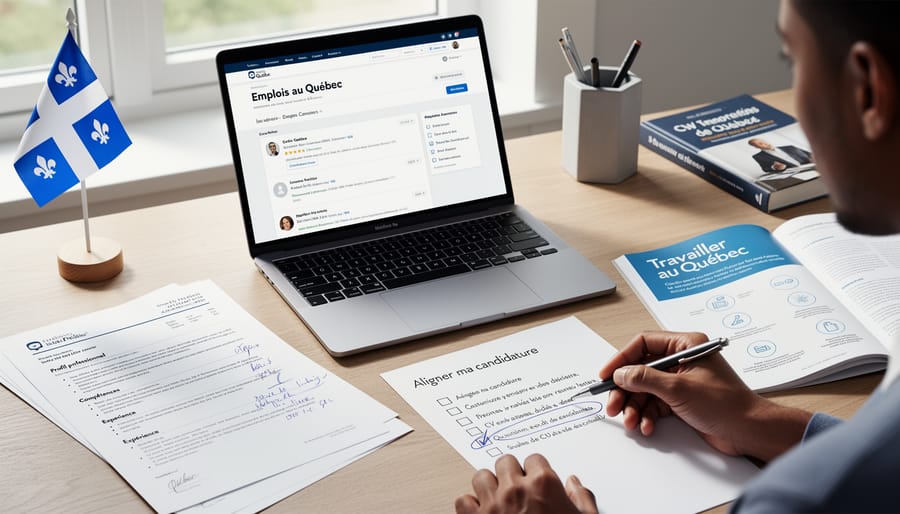
Your resume and cover letter need to reflect Quebec’s professional values while meeting French-language expectations. Start by creating a French version of both documents, even if the job posting appears in English, many Quebec City employers appreciate receiving materials in French as a sign of cultural respect and integration effort.
Format your resume in the Canadian style: include a professional summary at the top, emphasize transferable skills, and list education with Canadian equivalency noted if your credentials come from abroad. Quebec employers value formal education highly, so place this section prominently. Avoid the U.S. approach common in USCIS hiring contexts, don’t include photos, age, or marital status.
Your cover letter should be concise, formal, and address the hiring manager by name when possible. Open with why you’re interested in the organization specifically, not just the role. Highlight your commitment to Quebec’s language and culture, mentioning any French language training or cultural integration steps you’ve taken.
If you need help adapting credentials or understanding work permit requirements, contact immigration support services before applying. Demonstrating cultural awareness through properly adapted materials significantly improves your chances with Quebec City employers.
Interview Preparation
Quebec City interviews blend French formality with North American directness. Arrive five minutes early, punctuality signals respect. Dress conservatively: business attire for corporate roles, smart casual for creative fields. Men typically wear suits or dress pants with button-down shirts; women opt for tailored suits, dresses, or professional separates. Avoid overly casual clothing even when company culture seems relaxed.
Greet interviewers with a firm handshake and direct eye contact. Address them as “Monsieur” or “Madame” with their last name unless invited to use first names. While English interviews happen at bilingual companies, showing French effort, even basic greetings, demonstrates cultural respect and integration commitment.
Quebec interviewers value authenticity over polished sales pitches. Prepare specific examples of your work but avoid aggressive self-promotion. They’ll ask about your technical skills and how you collaborate with teams. Questions about your interest in Quebec life and culture are common; genuine answers about community integration resonate better than generic responses.
Expect conversations about work-life balance and long-term career goals. Quebec employers prioritize stability and cultural fit over flashy credentials. Ask thoughtful questions about team dynamics and company culture, it shows you’re evaluating mutual compatibility, which Quebec professionals respect.
First Days on the Job
Your first days in a Quebec City workplace set the tone for your professional relationships. Arrive 10-15 minutes early to show respect for schedules. Greet colleagues with a handshake and introduce yourself in French if possible, even a simple “Bonjour, je m’appelle [name]” demonstrates cultural effort. Pay attention to how coworkers address each other, some workplaces use first names immediately while others maintain formal titles initially.
Observe before speaking up. Notice how meetings run, when colleagues take breaks, and communication preferences. Ask questions about unclear expectations rather than making assumptions. Show willingness to learn Quebec-specific processes, even if you have experience elsewhere.
Dress slightly more formally than expected for your first week until you understand the office culture. Thank colleagues who help you settle in, and participate in lunch conversations when invited, these informal moments build essential workplace relationships.
Common Questions About Quebec Professional Culture
Do I need to speak French to work in Quebec City?
Most professional positions in Quebec City require at least functional French skills, as French is the official language of work. However, some roles in international companies or specific technical fields may operate primarily in English. Your language abilities will significantly impact your job opportunities and Quebec City integration experience.
Is workplace dress more formal or casual in Quebec?
Quebec workplaces generally lean toward smart casual rather than highly formal attire. While traditional industries like law and finance maintain more formal standards, many offices embrace a relaxed approach, think clean, well-fitted clothing without necessarily requiring suits daily. When in doubt, dress slightly more formally for your first week and adjust based on what colleagues wear.
How do Quebec work hours compare to other North American cities?
Standard work hours in Quebec City typically run from 9 a.m. to 5 p.m., similar to other Canadian cities. What differs is the cultural expectation around work-life balance: Quebecers value personal time, and working late regularly isn’t seen as a badge of dedication but rather poor time management or organizational issues.
What should I know about networking in Quebec’s professional culture?
Building genuine relationships matters more than collecting business cards. Quebecers prefer to establish personal rapport before jumping into business discussions, so expect coffee meetings and conversations about non-work topics. Professional networking often happens through industry associations, community events, and informal gatherings rather than purely transactional exchanges.
Beyond these common questions, remember that cultural adaptation takes time. You’ll make mistakes, and that’s expected. Quebec professionals generally appreciate when newcomers make an effort to understand local customs, even if they don’t get everything right immediately. Ask questions when you’re unsure, observe how colleagues handle situations, and don’t hesitate to clarify expectations with your supervisor. Most workplaces recognize that cultural integration is a learning process and will support you as you adjust to Quebec’s professional environment.
Understanding Quebec’s professional culture isn’t just about fitting in, it’s about setting yourself up for real career success in Quebec City. When you grasp how workplaces function here, from the emphasis on French communication to the collaborative decision-making style, you move from being an outsider trying to decode unwritten rules to a confident professional who knows how to build relationships and contribute effectively.
Cultural awareness gives you a practical advantage. You’ll write stronger applications, handle interviews with appropriate etiquette, and navigate your first months on the job more smoothly. You’ll understand why colleagues prioritize work-life balance or why building personal connections matters alongside professional competence.
The good news? You don’t have to figure this out alone. JobGo connects you with Quebec City employers who value cultural diversity and provides resources designed specifically for newcomers navigating the local job market. Whether you need help understanding workplace expectations, crafting culturally appropriate application materials, or finding organizations that support integration, we’re here to support your journey.
Start exploring opportunities today. Your understanding of Quebec’s professional culture, combined with the right resources and connections, creates a foundation for lasting career success in this vibrant city.