
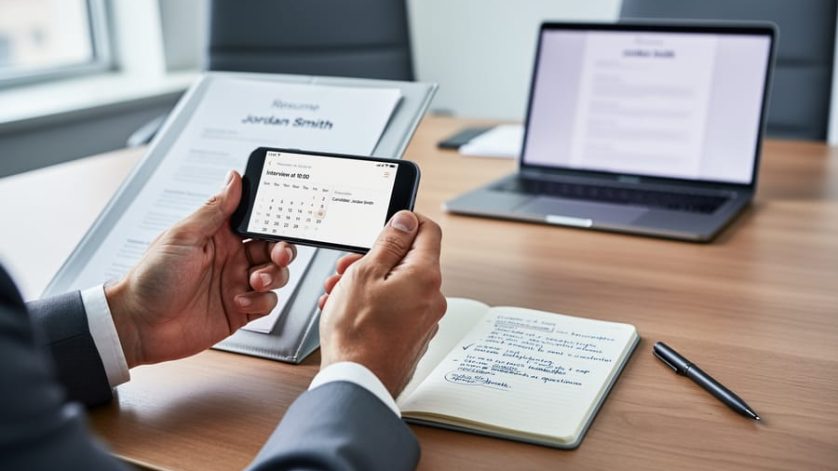
A good post-interview follow-up email takes about ten minutes to write and should reach your interviewer within 24 hours. It has four short parts: a clear subject line, a thank-you, one sentence that connects your skills to the job, and a polite close. That’s all you need.
Why does it work? A short, friendly message reminds the hiring team who you are and shows you’re serious about the role. It also gives you one more chance to share a detail you forgot in the room.
If you’re new to Quebec City, or English isn’t your first language, don’t worry. Simple, warm sentences work best, and you’ll find a ready-to-use sample below that you can copy and change. We’ll also share a version for newcomers, tips for fitting in with local workplace culture, and where to find help with work permit questions.
What You Need Before You Write Your Follow-Up Email
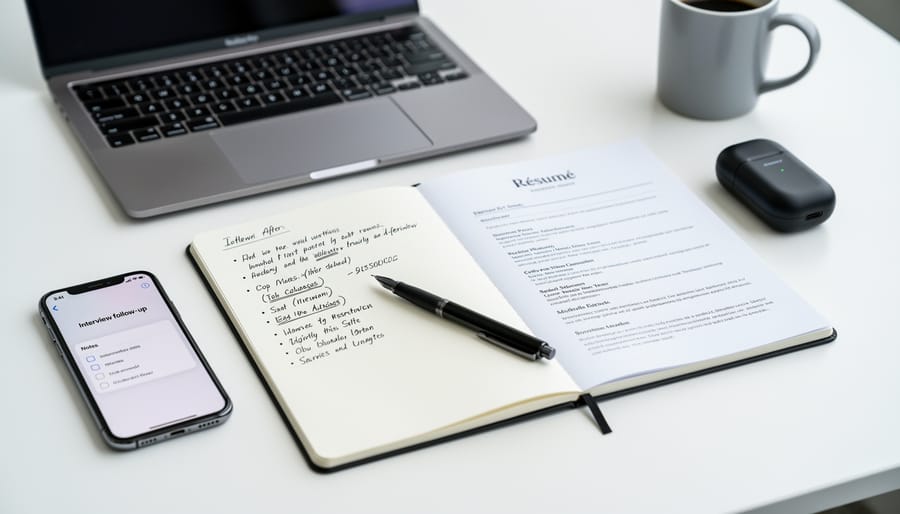
Before you start writing, take a few minutes to gather the basics. You do not need anything fancy. If you have never sent a follow-up email before, this short checklist will make the whole process easier:
- The interviewer’s full name and job title.
- Their email address.
- The exact job title and company name.
- Two or three notes from your conversation, such as a topic you enjoyed discussing.
- A spell-check tool, such as the one built into your email program.
You will also want a few quiet minutes. Writing a good email is much easier when you are calm and not rushed.
What if you are missing something? Don’t worry. This is very common, and the details are usually easy to find. Check your confirmation email first, because it often includes the interviewer’s name and email address. The original job posting can help you confirm the job title and company name. If the interviewer gave you a business card, it will list their full name, title, and contact details. You can also look at the company website, where team pages often show names and roles.
If you took notes during the interview, read them once before you write. A small, specific detail makes your message feel personal and real.
How to Write a Post Interview Follow Up Email, Step by Step
Choosing a Clear Subject Line
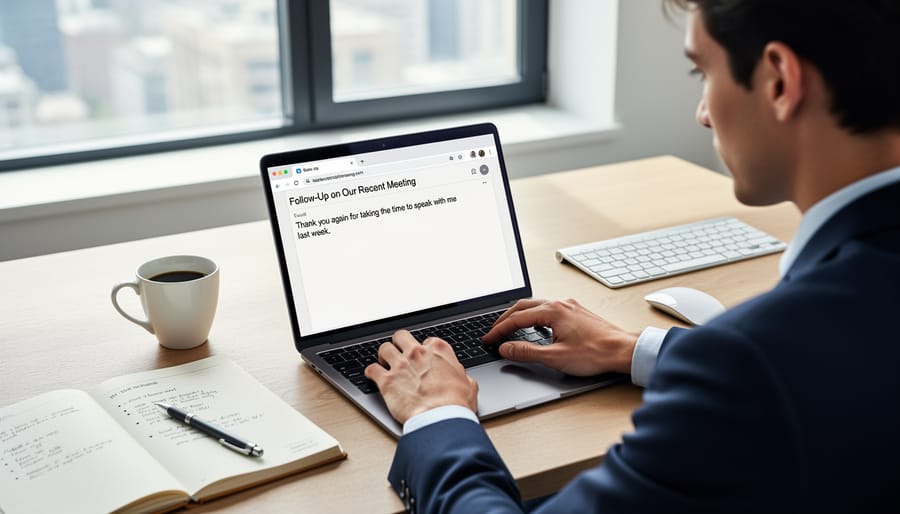
A good subject line tells the employer who you are and why you are writing. Keep it short, clear, and professional. Include the job title so the hiring manager can find your email quickly.
Here are a few simple examples you can copy:
– Thank You: [Job Title] Interview
– Thank You for Meeting With Me, [Your Name]
– Following Up on the [Job Title] Interview
Avoid long or vague lines like “Hello!” or “Quick question.” They can get lost in a busy inbox. If you spoke on a certain day, you can add it, like “Thank You: [Job Title] Interview on Tuesday.”
Timing: When to Send Your Email
The best time to send your follow-up email is within 24 hours of the interview. Sending it the same day, or the next morning, keeps you fresh in the employer’s mind. The conversation is still clear to them, and your message shows you are interested and organized.
If you forgot, please don’t worry. A late thank-you is still better than none. Send it as soon as you can, even two or three days later. You can simply begin with, “Thank you again for meeting with me on [day].” A calm, friendly note still leaves a good impression.
Post Interview Follow Up Email Sample You Can Copy
A Short Version for Busy Employers
Some employers read dozens of emails a day, so a brief note can work best. Here is a short version you can copy:
Subject: Thank you, [Job Title] interview
Dear [Interviewer’s Name],
Thank you for meeting with me today about the [Job Title] role. I enjoyed learning about [specific detail from the interview], and I am excited about the chance to join your team. Please let me know if I can share anything else.
Kind regards,
[Your Name]
This version is short, polite, and easy to read in under a minute. It still shows your interest and names one real detail from your talk, which helps the employer remember you.
A Sample for When You Are New to Quebec or Canada
If you are new to Quebec or Canada, you can add one short line about your start date or work permit. Keep it simple and confident.
Subject: Thank you, [Job Title] interview
Hello [Interviewer’s Name],
Thank you for meeting with me on [day]. I enjoyed learning about [specific detail] and I am excited about this role. I am authorized to work in Canada and can start on [date].
Thank you for your time. I look forward to hearing from you.
Warm regards,
[Your Name]
If you are not sure how to describe your status, JobGo’s guides on work and immigration can help you choose clear words.
A gentle tip: in Quebec City, a polite and warm tone is appreciated. Emails may be in French or English, so follow the language used in your interview or the job posting. Learning about Quebec professional culture will also help you feel more confident.
Things to Avoid So Your Email Stays Professional
A few small habits can keep your post interview follow up email polished and professional. Here is what to do instead of the common mistakes.
Read your email out loud before sending. This helps you catch typos and awkward sentences, and a spell checker alone will not always find them.
Make the sample your own. Do not copy it word for word. Add one real detail from your conversation, such as a project the team mentioned, so the email sounds like you.
Keep it short. Three to five sentences is plenty. Busy employers appreciate a clear, friendly note they can read in under a minute.
Send one email, then be patient. Several emails in a row can feel pushy, even when your intentions are good. If you met more than one interviewer, send each person their own message instead.
How to Check Your Email and What to Do Next

Before you hit send, take two minutes to review your message. Read it out loud, or slowly on screen, to catch typos. Check that the interviewer’s name is spelled correctly, the job title is right, and the email address has no mistakes. Make sure you mention one specific thing from the conversation. If you are writing in a second language, paste the text into a free spell checker, or ask a friend to read it once.
After you send it, be patient. Most employers need a few days to decide, and many are still meeting other candidates. Wait about a week from your first email, or use the timeline the interviewer gave you. If you hear nothing, you can send one polite second message. Keep it very short, restate your interest, and ask if there is any update. One gentle reminder is fine. More than that can feel pushy.
This email is only one part of good follow-up. If you met several people, thank each interviewer separately, and change a detail or two so each message feels personal. You can also connect with them on a professional network like LinkedIn, with a short note saying you enjoyed meeting them. These small, kind steps show respect and keep the door open, even if this job does not work out.
Common Questions About Post-Interview Follow-Up Emails
Should I send a follow-up if I felt the interview went badly?
Yes. A short, kind thank-you can leave a better last impression than silence. Employers often judge you on more than you remember.
Can I write my email in French or English?
Use the language you spoke in the interview or the one in the job posting. If you are not sure, English is fine, and a simple “Bonjour” at the start is a warm touch in Quebec City.
What if I do not have the interviewer’s email?
Check the interview confirmation, the job posting, or the company website. You can also ask the recruiter or reception team politely.
Is a handwritten note better than an email?
Not usually. Email is faster, and hiring decisions can be made within days, so send the email first.
How many follow-ups are too many? One thank-you email after the interview and, if you hear nothing, one polite check-in a week or so later is plenty. More than that can feel pushy, and it takes time away from other searches. While you wait, keep applying and find Quebec City jobs that match your skills, so you always have another chance in progress.
A short, kind follow-up email is a small step that can help you stand out. It shows the employer you are polite, interested, and ready to work. Take the sample from this guide, change the details to fit your interview, and send it with confidence. You do not need perfect English or French, only clear and honest words.
While you wait for a reply, keep moving forward. Review these bilingual resume tips browse JobGo’s job listings, and read our work permit guides. Your next opportunity in Quebec City may be closer than you think.