

In Quebec City, the best bilingual resume is usually two resumes: one in French and one in English, each matched to the language of the job posting. This takes a few hours to set up, and you don’t need to be an expert in either language to do it well. Most employers here appreciate clear, honest, well-written documents more than perfect grammar.
If you’re new to Canada, the language question can feel stressful. Should you write in French, English, or both? The answer depends on the job, and the seven tips below show you how to decide. You’ll learn how to describe your language skills honestly, translate job titles carefully, follow local resume style, and show your right to work. You’ll also find ways to reflect your cultural fit, which helps employers see you as someone who will settle in and grow with their team.
We chose these tips because they solve the problems newcomers face most often. Each one is simple, practical, and easy to start today.
How We Chose These Bilingual Resume Tips for Quebec City
Choosing advice for a bilingual resume in Quebec City is not about collecting every tip we could find. We kept only the ones that helped real job seekers, whether they grew up here or arrived last month. Each tip had to pass four simple checks:
- Local relevance: it fits Quebec City employers, where French is the main language at work.
- Simplicity: it is easy to follow, even if English is not your first language.
- Usefulness for newcomers: it helps people new to Canada while still being useful for local residents.
- Practical impact on hiring: it matches how employers in the region commonly read and sort resumes.
We also kept the tips evergreen. That means they stay useful as time passes, and they focus on habits you can build now rather than rules that change quickly.
Please remember that this guide is a starting point. A local employment service can look at your own resume and give personal advice, and we encourage you to ask them for a review. Think of these tips as a friendly first step. They will help you feel more confident as you apply, and you can always adjust them as you learn more about the job market here.
1. Check the Job Posting Language and Match It
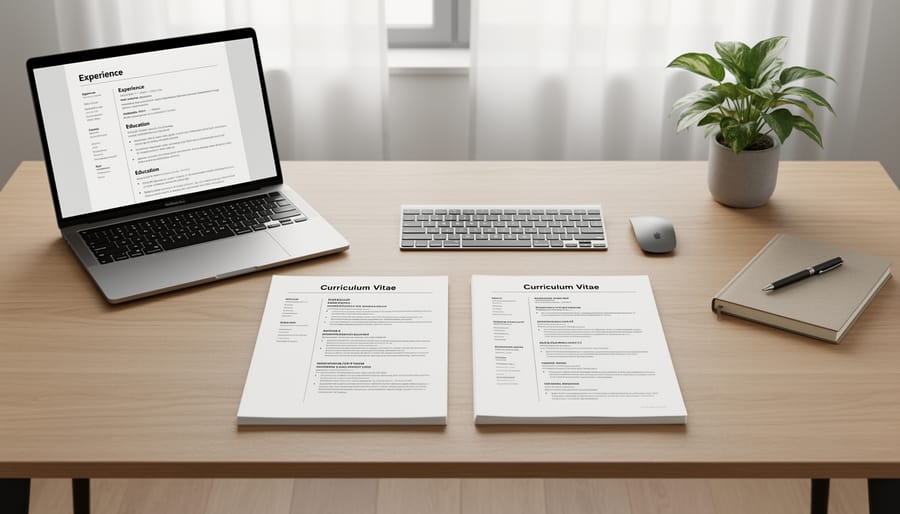
Start with the job posting. The language it is written in is your strongest clue about which resume to send.
If the ad is in French, send a French resume. Many Quebec City employers work in French every day, and French is the main language of the workplace in the region. A French ad usually means the team expects to read your application in French too. If the ad is in English, an English resume is usually fine, but check whether the role also asks for French skills. Some English ads still need strong French for customer contact or teamwork.
Sometimes the posting is bilingual or the language is unclear. In that case, look at the other clues. Does the company website appear in French first? Does the ad ask for “bilingual” candidates? Does the contact person have a French name or email signature? These small details can help you choose.
If you still cannot decide, sending both versions is a safe and respectful choice. It shows you understand the local job market and that you took the time to prepare. Just make sure both resumes say the same things, so nothing looks different between them.
2. Describe Your Language Skills Clearly and Honestly
Your language skills often matter as much as your work history in Quebec City, so this part of your resume deserves care. The goal is simple: tell employers what you can really do, and show how you know.
Use short, plain labels next to each language. Four labels work well:
– Basic: you understand simple words and can handle short, familiar conversations.
– Working: you can do your daily tasks in this language, with some mistakes.
– Fluent: you speak, read, and write easily, including with customers or colleagues.
– Native: it is your first language.
Put these in a clear “Languages” section, for example “French: Working | English: Fluent.” You can also split speaking, reading, and writing if your levels are different. Many people read French well but feel less sure speaking it, and that is useful information.
Then add proof. A label on its own is just a claim. You might write “Completed Level 5 French course, 2025” or “Worked in English with international clients for three years.” A test score or a certificate helps too. If you studied or worked in a language, say so in one short line.
Please be honest, even if your French is still growing. A developing skill is still valuable, and many employers like to see that you are learning. Showing a course in progress tells them you are motivated.
Be ready for interviews. Employers often switch languages or ask follow-up questions to see how you really communicate. Choosing an accurate label means you can answer with confidence.
3. Use Two Separate Resumes Instead of Mixing Languages
It can be tempting to put French and English on the same page so you cover every possibility. In most cases, this makes your resume harder to read. A mixed-language page can look crowded, and a recruiter may wonder which language you actually want to be judged in. One resume per language looks cleaner and shows you took the time to prepare properly.
Start with one complete resume in French and one complete resume in English. Each one should use only its own language, from the section titles to the job descriptions.
Next, keep both versions matching. Check that these details are exactly the same:
– Dates of employment and education
– Job titles (translated carefully, but meaning the same role)
– Employer names and city names
– Phone number, email address, and any online profile link
A small difference, like a different start date, can raise questions during hiring. After you update one resume, update the other the same day.
Finally, save your files with clear names so you never send the wrong one by mistake. For example, use “Amina-Diallo-CV-francais.pdf” and “Amina-Diallo-Resume-English.pdf”. Add the job title or company name if you tailor each file. A clear name also helps the employer find your document easily.
4. Translate Job Titles and Skills with Care

A direct, word-for-word translation can make your resume harder to read, so it’s worth checking each job title and skill before you write it in French. Many titles look similar in both languages but are not used the same way in Quebec workplaces. Understanding Quebec professional culture helps you see why employers expect familiar, local wording.
Start with real job postings in Quebec City. Search for the role in French, then copy the title and the skill words that appear again and again. Those are the terms employers actually use. You can also check Quebec’s official job-title and occupation resources, which list standard names for most professions. If you are also sorting out work and immigration questions, using the same official terms on your resume keeps everything consistent.
Here are a few simple pairs:
– Sales Associate: Commis aux ventes or Conseiller aux ventes
– Customer Service Representative: Préposé au service à la clientèle
– Accountant: Comptable
– Project Manager: Gestionnaire de projet or Chargé de projet
Notice that the best French title is not always the closest-sounding one. If you are unsure, pick the version you see most in job ads for your field, and keep it the same on every resume you send.
5. Follow Local Resume Style and Format
Quebec City employers usually like a resume that is easy to scan. Aim for one to two pages with clear sections, such as Summary, Experience, Education, Skills, and Languages. Use a simple font and plenty of white space, so a busy hiring manager can find what they need quickly.
List your jobs in reverse chronological order, with your most recent role first. Add a short professional summary at the top, about two or three lines, that says who you are, what you do well, and the kind of job you want. In your summary, you can mention your language skills in a few simple words.
If your education or work experience is from outside Canada, help employers understand it. Write the name of the school or company, the city and country, and a short plain description of what it is. For example, you can add “private engineering company with 200 employees.” For degrees, write the full name of the program in the language of your resume. You can also say what level it matches in Canada. Local employers often appreciate this small extra detail.
You usually do not need a photo, your age, your marital status, or your date of birth. Employers generally do not expect these details, and it helps to avoid unnecessary personal info. Keep your focus on your skills and results.
6. Show Your Right to Work and Your Cultural Fit
Employers in Quebec City often want to know early whether you can legally work in Canada. You can answer that question in one short, confident line near the top of your resume, right under your contact details or inside your professional summary.
Keep it simple and factual. For example: “Authorized to work in Canada” or “Open work permit valid until June 2027.” If you are still applying for your permit, you can write “Eligible to work in Canada, permit application in progress.” Write this line in the same language as the rest of that resume version. In French, “Autorisé(e) à travailler au Canada” works well.
If you are unsure how your status should be described, local employment support can help you find clear, trustworthy answers.
Next, show that you want to be part of the community. Quebec City employers value people who work well in a team and respect local culture. A short line about your willingness to learn French, such as “Currently completing French classes, level B1,” tells them you are investing in your future here. You can also add volunteer work, a neighbourhood group, a sports club, or a cultural event you helped organize. These details show warmth, reliability, and real connection to Quebec City. They also give employers a friendly way to start a conversation with you in the interview.
7. Proofread in Both Languages Before You Apply
Before you hit send, read each resume one more time. Small mistakes are easy to fix, and fixing them shows you care about the job.
Check each language on its own. In French, look closely at accents, such as é, è, à, and ç. A missing accent can change a word or make your resume look rushed. In English, check spelling, verb tenses, and capital letters. Also make sure your dates, job titles, and phone number match in both versions.
Use spell-check tools to catch the easy errors. Free tools like the checker in Word or Google Docs, or a grammar tool such as Antidote for French, can help. They are not perfect, though, so read slowly, and try reading each line out loud. This helps you notice words that sound wrong.
Then ask someone to look it over. A friend, a mentor, or a coworker who speaks the language well can spot problems you might miss. Local employment services can also review your resume for free, and many are happy to help newcomers. A fresh pair of eyes makes a real difference.
When both versions are clean and ready, you can feel confident as you find Quebec City jobs and start applying.
Bilingual Resume Questions Newcomers Often Ask
Many newcomers ask the same things when they start building a resume for Quebec City. Here are clear, friendly answers to help you move forward with confidence.
Should I list a language I am still learning?
Yes, as long as you describe your level honestly, for example “basic French” or “working French.” A developing skill still has value, and it matches the advice in tip 2 about being clear and honest.
Can I send an English resume to a Quebec City employer?
Sometimes, but it depends on the job. Check the language of the posting first, as tip 1 explains. If the ad is in French, a French resume is usually the safer choice.
How long should my resume be?
One to two pages is usually enough. Put your most recent and most relevant experience first, and keep each section easy to scan.
Do I need a cover letter in French?
If you apply in French, a French cover letter is a good idea because it shows you care about the role. If you are still learning, ask a friend or local service to review it before you send it.
You may also wonder where to find free help. Local employment services in Quebec City often offer resume reviews and job search support for newcomers, and many community organizations do too. A mentor, a language teacher, or a friendly coworker can also read your resume and point out small mistakes you might miss.
If you are still choosing between a French resume, an English one, or both, take it one step at a time. Start with the job posting, write clearly about your language skills, and ask someone to proofread. Each small step makes your application stronger.
Your Next Step Toward a Strong Bilingual Resume
You already have what you need to build a resume that Quebec City employers will take seriously. The biggest wins are simple: show your language skills clearly, match the language of the job ad, and translate your job titles with care. None of these needs perfect French or English. They only need a little attention before you click send.
Pick one tip and start today. Maybe you will rewrite your language section, or finally check that one job title in French. Small steps add up quickly. When you feel ready, browse the job listings on JobGo and look at the work permit resources to see which roles fit your situation. Your first strong application may be closer than you think.